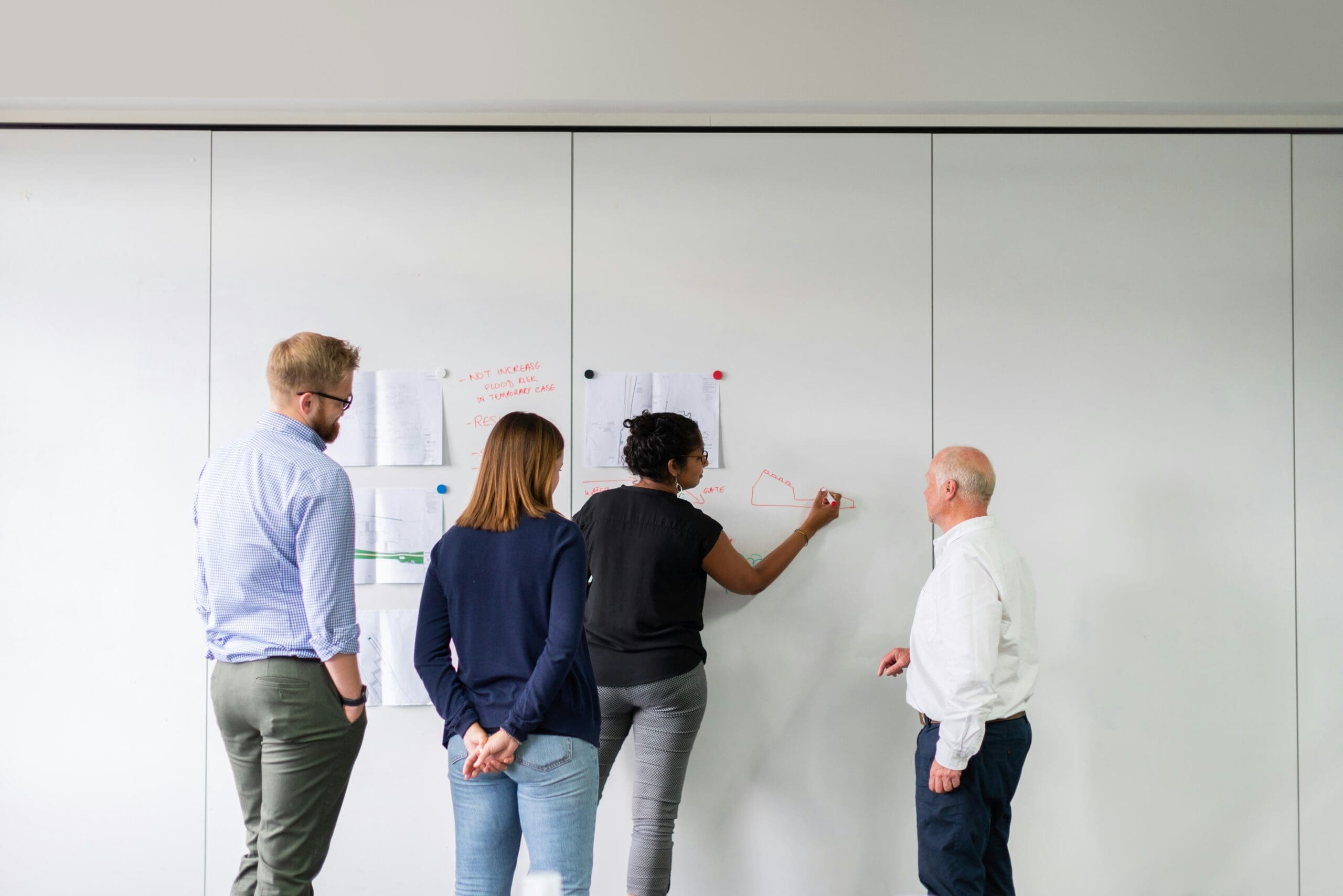
Adopting agility is not just about implementing Scrum or Kanban; it is a deep cultural shift that transforms practices and collaboration within organizations. This is where an agility expert steps in, guiding teams and leaders throughout their journey.
Whether supporting a start-up in Lausanne, a multinational in Geneva, or an established company elsewhere in Switzerland, this professional’s mission remains the same: to create the right conditions for agility to become a natural reflex and a driver of sustainable performance.
A Hybrid Role at the Crossroads of Several Disciplines
The work of an agile coach supporting teams in Geneva goes far beyond traditional coaching. It blends several complementary dimensions:
– training employees in agile practices and key roles;
– one-on-one mentoring for tailored support;
– facilitating communication between stakeholders;
– consulting to provide clear diagnoses and tailored solutions;
– and of course, professional coaching to unlock the team’s full potential.
This versatility makes the agile consultant a trusted partner, capable of adapting to diverse contexts and delivering tangible results.
Transforming the Organization as a Whole
Agility does not stop at a single team; it permeates the entire organization. An agility expert based in Switzerland operates across multiple levels: processes, governance, team dynamics, and company culture.
They often work in varied contexts: IT and non-IT projects, large-scale transformations, multilingual environments, and distributed teams across Zurich, Lausanne, and Geneva. Their effectiveness relies on two essential pillars: mastering agile principles and excelling in facilitation.
Over time, many experts develop specific specialties such as organizational change management, product leadership, or adapting HR practices to agility.
Teaching the Fundamentals of Agility
In many Swiss organizations, agility is still misunderstood or reduced to a handful of practices. The role of an agile coach in Lausanne is to shed light on the bigger picture. They lead training sessions on frameworks such as Scrum, Kanban, and Scrumban, as well as broader approaches like innovation, design thinking, and agile leadership.
Their teaching methods are dynamic and interactive: collaborative workshops, peer-to-peer learning, and case studies tailored to the company’s reality. The aim is not only to transfer knowledge but also to ensure teams can immediately apply it.
Facilitating Collaboration and Smoother Exchanges
One of the central missions of agile support for projects in Lausanne or Geneva is to improve communication between stakeholders. Acting as a facilitator, the coach runs workshops, retrospectives, and co-creation sessions.
By making obstacles visible and fostering an atmosphere of trust, they pave the way for greater transparency. Eventually, they step back, enabling teams to take ownership of these collaborative practices.
Mentoring: A Personalized Approach
Mentoring plays a vital role in the daily work of an agile coach in Switzerland. Unlike group training, mentoring focuses on personalized guidance.
A new Scrum Master, a Product Owner struggling with backlog prioritization, or a manager aiming to embrace agile leadership can all benefit from tailored support. The mentor shares practical experience and actionable advice, always adapted to the specific context.
Consulting Through Experience
Organizations also expect an agile expert to provide concrete answers. In this consulting capacity, they diagnose challenges, suggest solutions, and sometimes help with implementation.
This advisory role demands not just theoretical knowledge but above all practical experience knowing when to apply a framework, how to adapt practices for international teams, or how to foster cultural change without resistance.
Professional Coaching as the Foundation
In agile coach, the emphasis remains on coach. Like professional coaching, this practice involves helping individuals and teams clarify objectives, unlock potential, and chart a path to success.
For large-scale agile transformations, some coaches apply generative coaching approaches, creating practices that did not exist before and tailoring them to each organization. Supervision remains a non-negotiable requirement to ensure quality and ethics in this profession.
A Strategic Partner for Change
Ultimately, an agile coach in Switzerland acts as a catalyst for transformation. Partnering with leaders, managers, and teams, they foster new ways of working more collaborative, flexible, and sustainable.
Whether in Geneva, Lausanne, Zurich, or elsewhere, their role extends beyond methods. They embody an agile mindset, instill a new culture, and guide organizations step by step on their journey toward lasting agility.